
The First Decade of the Cheshire Jaycees: Building Civic Leadership in a Growing Town

Updated: Mar 11
Hopefully this is the first of the many installments of what the Cheshire Junior Chamber of Commerce (Jaycees) have done for the Cheshire Connecticut Community. There is just so much and many people that should be recognized for their contributions.

During the 1950s, Cheshire, Connecticut experienced one of the most transformative decades in its history. Once a quiet agricultural village defined by farms, orchards, and greenhouses, the town rapidly evolved into a thriving suburban community. Between 1950 and 1960, Cheshire’s population more than doubled—from 6,295 residents to 13,383—bringing new families, new neighborhoods, and new demands on civic life. In this period of change, the Cheshire Junior Chamber of Commerce, commonly known as the Cheshire Jaycees, emerged as one of the town’s most energetic and influential civic organizations.
A Town in Transition
The growth of Cheshire in the 1950s mirrored broader postwar trends across Connecticut and the nation. Returning veterans, the baby boom, and expanding highway systems fueled suburban development. In Cheshire, more than 17 percent of the town’s housing stock was constructed during this single decade, reshaping the landscape with new subdivisions while still preserving much of its rural character.
Agriculture remained a defining feature of the town. Cheshire was widely known as the “Bedding Plant Capital of Connecticut,” with greenhouses, apple orchards, and open fields stretching across the countryside. At the same time, modern infrastructure was taking shape. A railroad line ran along the canal corridor—now the linear park—with trains passing through town twice daily. Interstate 84, which would later accelerate development even further, was under construction during the late 1950s and completed through Cheshire by 1961.

Educational needs also grew rapidly. Overcrowding became so severe that schools such as Humiston School operated on double sessions in 1951 and 1952. In response, the new Cheshire High School, serving grades 7 through 12, opened its doors in 1953, marking a major milestone in the town’s educational development.
Local commerce expanded alongside population growth. The Cheshire Herald began publication in 1953, providing the town with its own newspaper voice, while the Home National Bank opened new quarters that same year, reflecting increased economic activity and financial confidence.
Formation of the Cheshire Jaycees

It was within this dynamic environment that the Cheshire Jaycees took shape. In May 1954, the recently formed Cheshire Junior Chamber of Commerce received its official charter during a two-day convention held at Cheshire Academy. Early leadership included President William Sandwick, Treasurer F. Alden O’Neal, Projects Chairman Warren H. Dougherty, and Publicity Chairman Richard Haury. Their goal was clear: to provide young men between the ages of 21 and 35 with opportunities for leadership development while channeling their energy into meaningful community service.
From the outset, the Cheshire Jaycees aligned themselves with the national Jaycees mission—developing civic leaders through hands-on projects that improved local communities. In Cheshire, this translated into a wide range of initiatives that touched nearly every aspect of town life.
Civic Projects and Community Improvement
One of the Jaycees’ early and most practical contributions came in 1954, when the organization took responsibility for selling house numbers to Cheshire residents. This project followed a town-wide home numbering initiative conducted by Technical Planning Associates of New Haven. Jaycee members canvassed neighborhoods, selling standardized house numbers, with proceeds earmarked for future civic improvement and welfare projects. The effort not only raised funds but also supported public safety and municipal organization.

The Cheshire Jaycees were also active in beautification and community pride efforts. In December 1955, meetings held at the Humiston Professional Building included planning for a Christmas doorway contest, encouraging residents to decorate their homes for the holiday season. That same year, the organization organized a dinner dance and collected donations in support of the U.S. Olympic team, demonstrating both local engagement and national awareness.
Leadership Development and Statewide Involvement
Leadership training was central to the Jaycees’ mission, and Cheshire members played an important role at the state level. In early 1957, twenty-one members from Cheshire and neighboring towns completed a series of leadership courses sponsored by the Junior Chamber of Commerce. T. Ronald Butler and William Hines served as co-chairmen for the state organization, underscoring Cheshire’s growing influence within the Connecticut Jaycees.
Participants in these courses included individuals who would later become prominent in town affairs, such as Robert L. Bergen, Edward L. Friend, Robert L. Patrick, John Lane, Edward Downes, and others. These programs helped create a pipeline of informed, confident leaders who would shape Cheshire’s civic and governmental life in the decades to follow.
Youth, Sports, and Cultural Activities
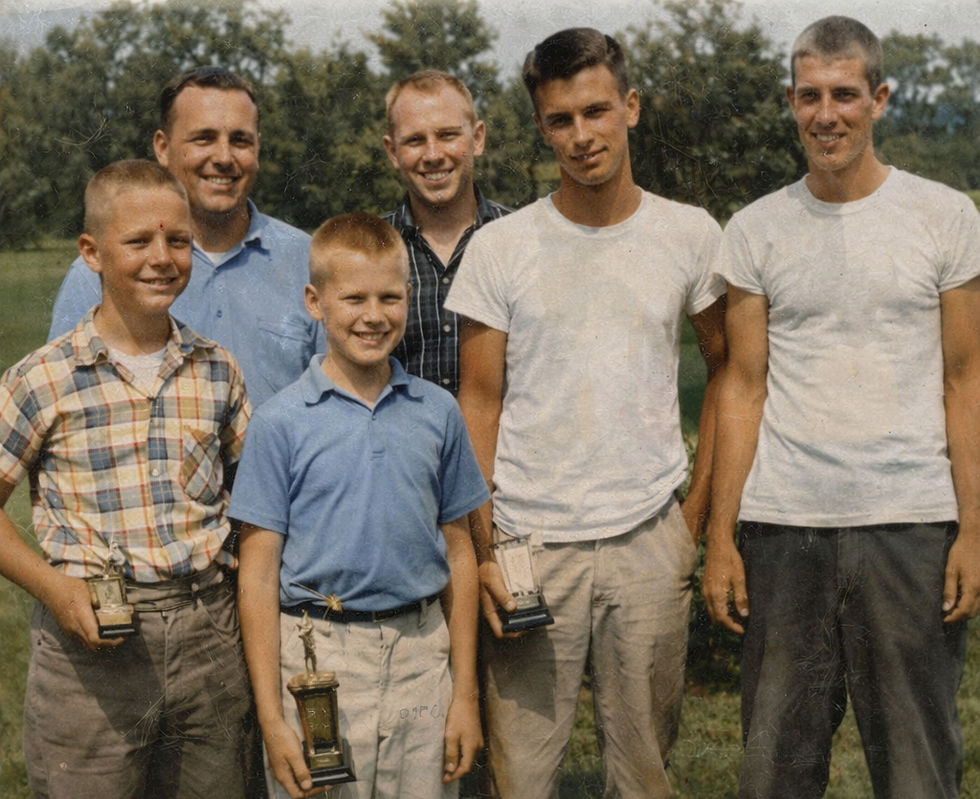
The Cheshire Jaycees devoted significant attention to youth-oriented programs, reflecting both national Jaycee priorities and local needs. In July 1956, T. Ronald Butler and Arthur Harper chaired a junior golf tournament sponsored by the Cheshire Jaycees. The winner advanced to the state tournament, giving local youth opportunities for competition and recognition beyond town borders.
In April 1956, Cheshire gained statewide attention when John Mark Bishop was named Outstanding Young Farmer by the Connecticut State Junior Chamber of Commerce. Bishop went on to compete at the national level in Pittsburgh, Pennsylvania, and was later honored at the annual Jaycees membership dinner held at the Green Dolphin Restaurant.
Cultural and social events were equally important. Semi-formal dances were held at Knights of Pythias Hall, including a well-attended event in October 1956 chaired by John Riordan, with committee members William Crane, Elliot Kerr, and Andrew Zeller. These gatherings fostered camaraderie among members while strengthening ties within the broader community.

The Jaycees also sponsored beauty pageant participation as part of their civic and promotional efforts. In July 1957, Miss Elaine Ann Smith, a Cheshire High School graduate and employee of Nationwide Insurance Company, was selected as the Cheshire Jaycees’ representative to the state beauty pageant in Torrington. Two years later, in August 1959, Miss Jean Louise Baldwin—daughter of Mr. and Mrs. John D. Baldwin of Harrison Road—was crowned Miss Cheshire and went on to compete as a finalist in the Miss Connecticut pageant.
Family Events and Recreation Initiatives
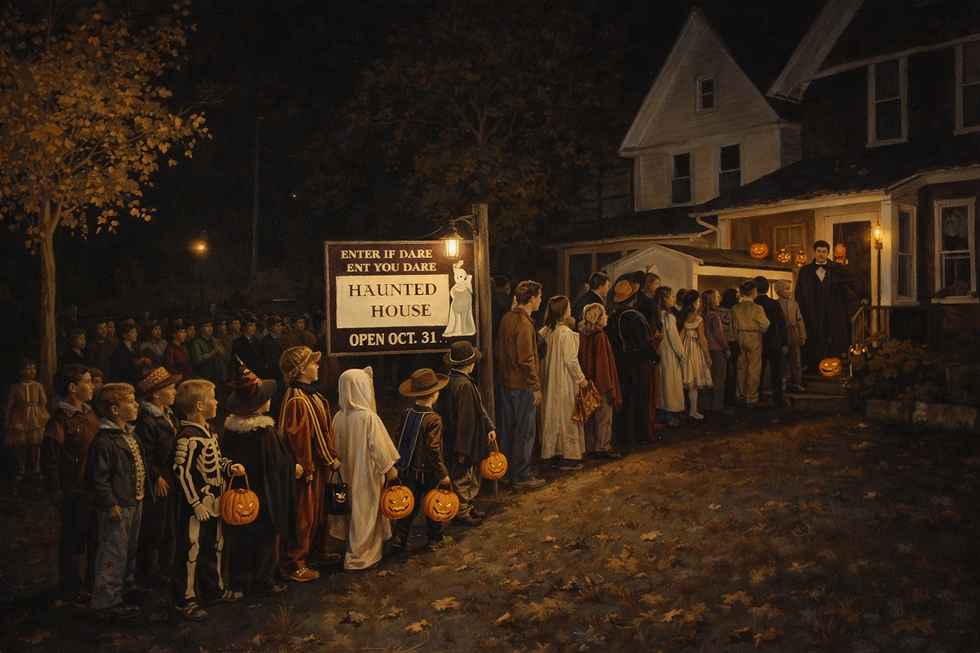
Halloween became another signature focus of the Cheshire Jaycees. In October 1957, plans were announced for an annual Halloween parade for children aged one to ten, followed by a costume contest with prizes for original, funny, and scary costumes. These events became cherished community traditions, offering safe, organized celebrations for families during a period of rapid growth.
By the late 1950s, the Jaycees increasingly turned their attention to recreation infrastructure. In January 1958, the organization announced plans to coordinate improvements to town recreation areas, including the establishment of a town recreational council composed of representatives from local service organizations. This forward-thinking approach emphasized collaboration and youth participation, including the idea of allowing students to elect their own governing board.
That same year, the Jaycees planned and executed major fundraising efforts. The annual Jaycee Fair, held near Perkins Motors on South Main Street, was expanded to three times its previous size. Featuring rides, booths, and a bake sale organized by the Jaycee Wives, the fair became one of the organization’s most important fundraising and community-building events.
In April 1958, the Jaycees went a step further by offering to construct a 100-foot-diameter concrete recreation plaza at Cheshire Park. Designed for dancing, roller skating, and music festivals, the plaza proposal reflected the Jaycees’ commitment to creating lasting, tangible improvements to town facilities. Discussions with the Park Commission also included picnic grounds and softball fields at the Milldale Road recreation area.
Lasting Impact
By the end of the 1950s, the Cheshire Jaycees had firmly established themselves as a cornerstone of civic life in a rapidly changing town. Through leadership training, youth programs, recreation initiatives, fundraising events, and community celebrations, the organization helped shape modern Cheshire while preparing a generation of young men for future roles in business, government, and public service.
Though many specific projects have faded into the background of local memory, the legacy of the Cheshire Jaycees’ first decade remains evident in the town’s institutions, traditions, and civic spirit. Their work during the 1950s not only supported a growing community but also ensured that Cheshire’s transition from rural village to suburban town was guided by active, engaged, and forward-looking citizens.


Comments