
Memories of the Cheshire Poor Farm
Updated: Mar 11
A Talk by Barbara (Buckland) Busk

Before the evening’s program began, many in attendance had the chance to see a remarkable artifact displayed in the exhibit room: the original board from Town Farm Wagon No. 4. That simple wooden board sparked the evening’s presentation and reopened a chapter of Cheshire history that might otherwise have faded from memory.
Last year, Barbara decided the Cheshire Historical Society might be interested in preserving the wagon board her father had kept for decades. When she and her husband sold the family home in 2001, she could not part with it. Instead, she entrusted it to her friend Sally Blakely, a Historical Society member, who delivered it to the Society. One conversation led to another, and before long, Barbara agreed to return from Branford to share her memories of the Cheshire Town Farm.
Barbara is the daughter of Wilbur Buckland, who managed the Town Farm from 1929 until the town discontinued its operation in 1938. The Buckland's later purchased the property. A Cheshire native, Barbara grew up on the farm and later raised her own family there. An active member of the DAR during her years in town, she used her genealogical and research skills to explore the deeper history of the farm she once called home.
The Early Years of the Poor Farm
The concept of a town poor farm dates back to the earliest days of settlement in Connecticut. By 1640, Hartford had established a poorhouse along the Connecticut River. Each town eventually maintained a place where those without means could live and, if able, contribute light labor.
In 1850, Hannah Brown sold property on what is now Country Club Road to the town for use as a
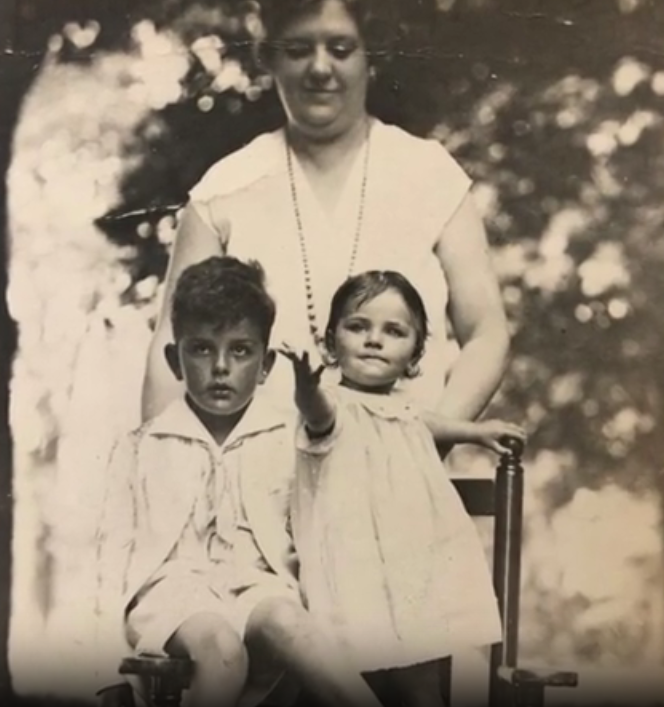
poorhouse. An additional 15 acres across the street—today near Scenic Court—were maintained as woodland to supply firewood. The property was heated entirely by stoves.
The farmhouse across the road had belonged to William Brown. A right-of-way allowed access to the wooded acreage behind it, which was also near orchards associated with Bishop’s Farm.
In 1900, town records show that a new house was constructed on the property. The original house, which stood to the right as one entered the driveway, was moved to the rear. Notably, the 1900 house had no fireplaces. When Barbara’s family lived there, it had no central heat and no insulation. The home was warmed by a stove in the basement, two on the first floor, and one upstairs. “Why it never burned,” she recalled, “I’ll never know.”
There was an icehouse in the backyard, stocked each winter with ice cut from a pond that no longer exists. Nearby stood a large woodshed.
The “Tramp House”
One of the more intriguing features of the farm was the so-called “tramp house.” This small structure had a dirt floor, a stove in the center, and bunk beds along three walls. The beds were built into the walls themselves. Three windows were fitted with bars—though, as Barbara noted, she did not believe her father ever locked the door at night.
Travelers, often called “tramps” at the time, could receive permission to stay overnight by obtaining a pass from the First Selectman, Birdsey Norton, whose home was on Academy Road (now Norton Brothers Farm).
Though they were not officially supposed to be given food, Barbara’s mother—known for her generous spirit and excellent cooking—often gave them bread, doughnuts, or pastries. These itinerant men followed established routes and left markings near properties indicating what kind of reception they might expect: “vicious dog,” “mean housewife,” or, perhaps most welcome of all, “good food.”
The numbers tell the story of the Depression years. In 1930, 148 transients stayed at the farm. In 1932, that number rose to 395. The peak year was 1933, with 471 men seeking shelter. By the mid-1930s, the numbers had dropped to the low 300s or high 200s.
Though they were offered food, they did not dine inside the house. Instead, many sat in the woodshed on a chopping block while Barbara’s mother brought them meals. Cheshire was not a bustling metropolis in those days, but the Buckland's’ gardens and fruit trees made them largely self-sufficient—and generous.
Life Inside the House
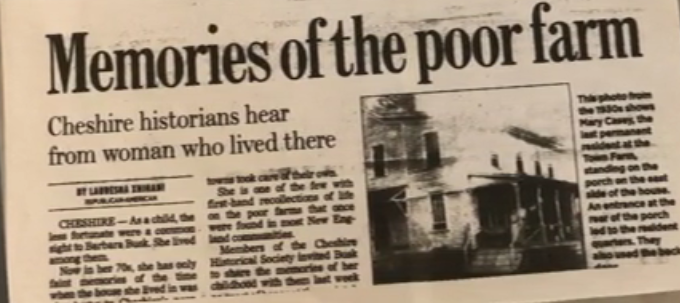
The farmhouse was arranged to separate the town residents from the Buckland family. Two front
doorways served different purposes: the left led upstairs to rooms used by town residents, while the right opened into the kitchen. Additional rooms upstairs were partitioned to house several individuals at a time.
The average stay varied. Some residents lived there for years; others stayed only months. Barbara remembered one woman who worked in the kitchen and lived there for much of her life.
There were no modern conveniences—no washing machines, no central heat until 1944. Laundry was done by hand, and winters were bitterly cold.
Wilbur Buckland and the Town Roads
Before managing the Town Farm, Wilbur Buckland worked in the dairy at Gaylord, then a tuberculosis sanitarium in Wallingford. During difficult economic times, he left briefly to sell medical equipment, but returned when sales proved scarce. He soon learned that Cheshire needed a manager for the Town Farm—someone who would also oversee the town roads.
Hired by Frank Rice, whose home later became the Slater Funeral Home, Wilbur moved his family to the farm in December 1929. Barbara was born in 1931.
Maintaining the roads was entirely manual labor. Roads were dirt or gravel, not paved. Sand was shoveled by hand. Tar was applied just before the school year began—much to Barbara’s mother’s dismay, as it inevitably ruined school clothes.
The End of the Poor Farm
The introduction of Social Security in 1936 marked the beginning of the end for many town farms. That March, at a town meeting led by Selectmen Birdsey Norton, Huxley, and Murphy, Cheshire voted to close the farm.
Wilbur Buckland was given first choice to purchase the property. The transition took until 1938, as the town needed time to sell off equipment and relocate remaining residents.
The farm once extended along West Road and included what is now Legion Field. When the Buckland's purchased the property, approximately eight to ten acres were set aside for the field.
A Tourist Home and Rotary Beginnings
After the town farm closed, the Buckland's moved into the rear house. The former dining area for town residents became their kitchen. In 1939, they opened a “tourist home”—essentially an early bed-and-breakfast. A large sign near Route 10 and Country Club Road directed visitors to the property.
Barbara’s mother served three meals a day, not just breakfast. Guests often stayed a week at a time. In 1944, the house was finally outfitted with central heat.
The Cheshire Rotary Club was organized at a dinner meeting held at the farm. The meal—home-style and plentiful—cost one dollar, with a ten-cent tip. The arrangement lasted only four months, as the growing attendance became too much for the family to manage.
Later Years

The property was sold in 1986, though the Buckland's retained four acres and the buildings. In 2001, it was sold again. The builder added land to expand Legion Field.
Barbara also recalled childhood memories of donkey baseball games held on the field and of walking or catching rides into town to attend school, as there was no bus service to the farm in her early years. Students traveled to either Waterbury or New Haven for high school.
In the attic of one of the buildings, the family once discovered a ball and chain and a straitjacket—relics of another era. As children, they had played with them, unaware of their somber implications.
A Living History
Today, the former Town Farm property has been beautifully restored by subsequent owners, a far cry from its days as a working poor farm. Yet through Barbara’s vivid memories—of cold winters, generous meals, gravel roads, and wandering travelers—the spirit of the old farm endures.
What began with a weathered wagon board became a window into Cheshire’s past: a reminder of how communities once cared for their own, how hard times shaped local life, and how one family’s stewardship preserved an important chapter of town history.
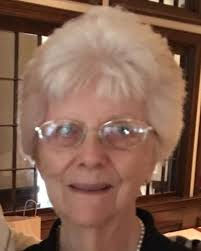
Barbara (Buckland) Busk passed away peacefully on August 3, 2020, at Yale New Haven Hospital, surrounded by the dignity and grace that defined her life. Born April 25, 1931, in Waterbury, she was raised in Cheshire, where she developed a lifelong love of farming, horses, and the value of hard work.
A graduate of University of Connecticut, Barbara began her career at Yale-New Haven Hospital and later served the community through Cheshire Public Schools. She was deeply devoted to genealogy and American history and was an active member of the Daughters of the American Revolution. A talented knitter, she lovingly created Christmas stockings that became treasured keepsakes for family and friends.
Barbara raised her family in Cheshire and spent her later years in Branford. A quiet and strong woman, she valued independence, family, and caring for others. She was predeceased by her husband of 56 years, Albert S. Busk; her parents, Wilbur N. and Lida (Vance) Buckland; and her brother, Richard A. Buckland.
She is survived by her four daughters, seven grandchildren, and a host of loved ones who will carry forward her legacy of strength, generosity, and enduring love.


Comments