
The Ferris Family of Cheshire: Culture, Conflict, and Service Across a Century


( I have used IA generated images in this article to enhance the story telling and because the originals are trade marked by Newspaper dot com. Original article and photo's can be found here): https://www.facebook.com/share/p/1C6ZekJB8h/ Let me know if it's good to do or bad to do.
CHESHIRE, CT — The history of Cheshire is often told through its institutions—Cheshire Academy, its churches, and its civic traditions—but few family stories encapsulate the town’s connection to national culture and global conflict as fully as that of the Ferris family. Spanning early 20th-century academia, Hollywood’s Golden Age, and the battlefields of World War II, the Ferris legacy reflects both privilege and profound sacrifice.
Foundations in Education and the Arts
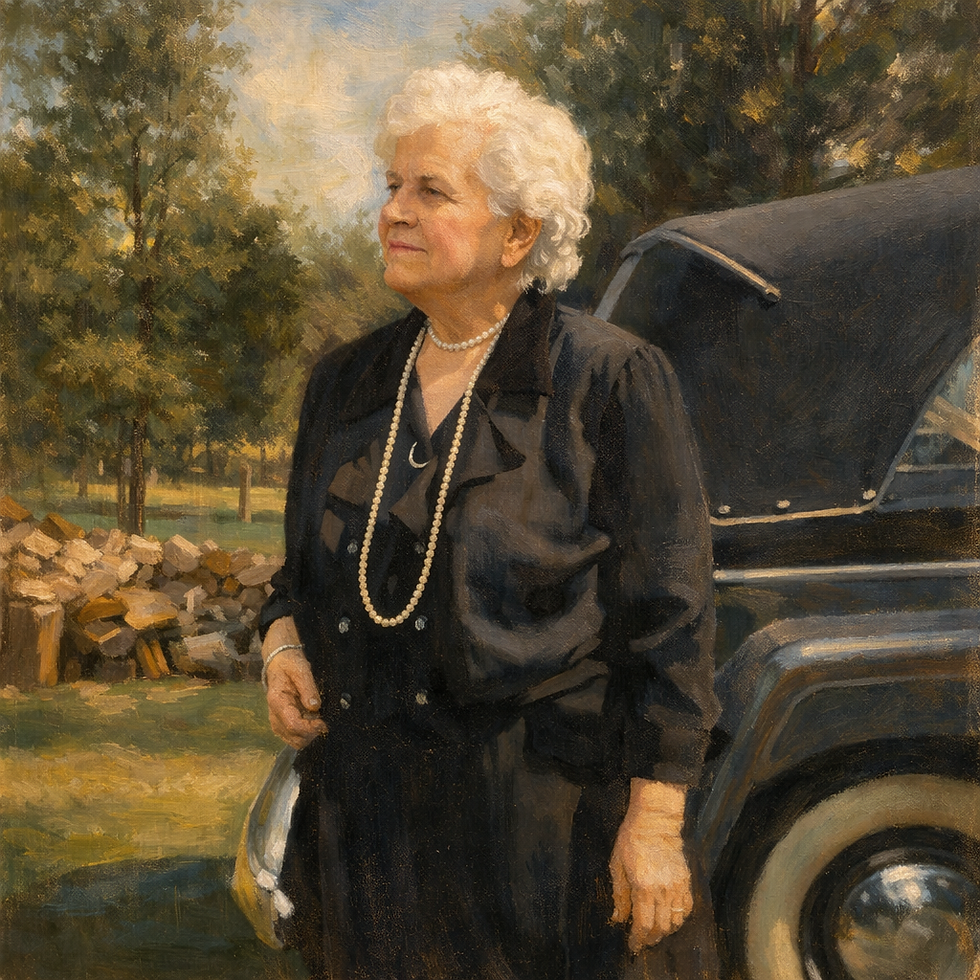
Alice Josephine Cheney was born and raised in New Haven, Connecticut, the daughter of a respected physician. Educated in music, she studied at Yale University and distinguished herself as an accomplished pianist. Her musical abilities led to her introduction to Walter Lewis Ferris, a Yale graduate originally from the Midwest with ambitions in writing, performance, and education. Alice accompanied Ferris during vocal performances, forming both a professional and personal partnership.

The couple married on June 16, 1910, in New Haven. They would have four children—Charlton, Jane, Stuart, and Geoffrey—while residing in New Haven and later Cheshire. Ferris’s academic credentials and family connections led to his appointment as headmaster of the Roxbury School, now known as Cheshire Academy, placing the family at the center of Cheshire’s intellectual and social life. Alice, frequently referred to as “Ann,” lived in the Donald Tucker house on South Main Street and became actively involved in the Cheshire Garden Club while managing the household.
A Departure from Cheshire
Despite professional success in education, Walter Ferris grew increasingly drawn to opportunities beyond New England. His departure for Hollywood marked a turning point for the family. In California, Ferris achieved prominence as a screenwriter during the early years of American cinema. His most enduring work, Death Takes a Holiday, would later be adapted into the 1998 film Meet Joe Black.

The marriage between Walter and Alice was marked by instability. The couple divorced in 1920, remarried in 1923, and divorced permanently in 1930. Walter later married British actress Violet Kemble-Cooper, fully immersing himself in Hollywood society. Alice remained in Connecticut, maintaining close ties to Cheshire and focusing on the upbringing of their children.
World War II and the Ferris Sons
When the United States entered World War II, Alice’s three sons answered the call to service, each distinguishing himself in a different theater of war.
Charlton Cheney Ferris served as a lieutenant in the U.S. Naval Reserve and commanded Landing Craft Infantry vessel LCI-438, configured as a fire-support gunboat. Assigned to the Southern Task Force in the Pacific, Ferris participated in the invasions of Eniwetok, Saipan, and Guam. During the February 1944 campaign at Eniwetok Atoll, his vessel provided close naval gunfire in support of troop landings, earning him the Bronze Star. At Saipan, Ferris played a key role in a coordinated naval ambush that intercepted Japanese counterattack barges attempting to strike American beachheads. For his leadership and bravery under fire, he received the Silver Star. He later earned a second Silver Star for his actions during the recapture of Guam, providing sustained fire support to Marine forces advancing inland.

Stuart Cheney Ferris, born in New Haven, was educated at Cheshire Academy and Yale University, graduating with the Class of 1939. In July 1942, he married Helen Angeline Taylor at St. Thomas Episcopal Church in Camden, Maine. Stuart served as an officer with the 266th Field Artillery Battalion, landing in Normandy shortly after D-Day and fighting across France and Germany. By the war’s conclusion, he had attained the rank of lieutenant colonel and was awarded the Bronze Star for meritorious service. Following the war, Stuart built a career in the insurance industry and later retired to Camden, Maine. Known for his deep devotion to his family and an enduring passion for automobiles, he remained closely connected to Cheshire Academy, where he later served for many years.

Geoffrey Cheney Ferris, the youngest son, was born on April 8, 1918, in New Haven. He attended the Roxbury School before entering Officer Candidate School at Fort Sill, Oklahoma. Commissioned as an Army officer, he served as an artillery observer with the 1st Infantry Division, known as the “Big Red One.” On May 6, 1943, during combat operations in Tunisia, Lieutenant Ferris advanced several hundred yards beyond friendly lines to establish an observation post when no suitable position could be found within the unit’s perimeter. Carrying a field telephone and wire reel, he was mortally wounded by enemy fire and died the following day. For his extraordinary heroism, he was posthumously awarded the Silver Star and the Distinguished Service Cross. He was initially buried in Tunisia and later reinterred at Long Island National Cemetery. The Geoffrey Ferris Award at Cheshire Academy honors the memory of Geoffrey Cheney Ferris, a World War II veteran and alumnus (Roxbury School, now Cheshire Academy) who died in service, with the award traditionally presented to the top soccer player, recognizing his legacy and connection to the academy's history. As of the 2025–2026 school year, the award remains a cornerstone of the school's tradition of honoring student-athletes.

Enduring Ties to Cheshire
While Walter Ferris’s life ultimately led him far from Connecticut, the family’s identity remained closely tied to Cheshire through education, service, and memory. Stuart Ferris’s later work at Cheshire Academy reaffirmed that connection, linking multiple generations to the institution his father once led.
Admittance of girls at the Cheshire Academy would limited to girl day students at the present time, said Dr. Griffin and Stuart C. Ferris, chairman of the board of trustees.
Today, the Ferris family story stands as one of Cheshire’s most compelling historical narratives—a reminder that behind the town’s quiet streets lies a legacy shaped by artistic achievement, global conflict, and extraordinary personal sacrifice.


Comments