

The Nature Observer’s Corner
Large Starling Flocks Are Awesome to Watch During Fall and Winter
For a common cosmopolitan bird, European Starlings (Sturnus vulgaris) can provide us with some real entertainment, especially when they move around in large flocks during the fall and winter. We have all seen them at one time or another, especially around shopping mall parking lots and in other areas that we commonly visit.
When we visit a large flock of Starlings perched on tree branches, we will often hear a chorus of high and low-pitched whistles, clicks and trills.
These flocks are exciting to watch when we see large numbers of birds take flight together, land together, communicate and feed together. It is exciting to watch the synchronized flight of a large Starling flock called a murmuration, in which all the birds in the flock move simultaneously together as one unit, like a highly choreographed “aerial dance.”
The observation area covered in this article includes Main Street north in front of the Cheshire Post Office, past Ace Hardware Store on the left and the Cheshire Senior Center on the right, eastward (right turn) along Hinman Street, north (right turn) on Highland Avenue, the Maplecroft Shopping Mall parking lot and its westbound exit, just to the right of Vespucci’s Restaurant.
A European Starling perched on a tree branch. Starlings are beautiful birds year-round, especially during the summer with their iridescent plumage.
This large Starling flock landed on and took flight from a grass island at the east edge of Maplecroft Plaza parking lot like a swarm of locusts.
To the best of my knowledge, the crabapple-like fruit and leaves shown in the above photo are those of an ornamental Flowering Pear Tree, one of several planted on islands of mulch in the Maplecroft Plaza parking lot. Starlings and other birds feed on these fruit throughout the fall and winter. Often when a Starling flock arrives at the parking lot, several Starlings will land on these trees and feed on the fruit.
A large flock of Starlings flies overhead.
These Starlings just took flight from some trees and are flying westward (toward the right of the above photo).
A Starling murmuration. Seen at a distance, this flock of Starlings looks like a cloud of dark specks. All the Starlings in this flock moved simultaneously as a single unit, creating the appearance of a well choreographed aerial dance. Murmurations often occur when a hawk is nearby.
.
Two Starlings flying overhead. Notice the light translucent color of the undersides of the wings. In a murmuration, it is the undersides of the wings that we see as a flash of light when the Starlings are at a position in the sky that maximizes their exposure to the sun.
A large flock of Starlings will often use this large tree on the lawn just north of the parking lot at Ace Hardware Store as a pre-roosting site, a temporary place to hang out. When you see them here, watch them for a while and listen to their chorus of whistles, clicks and trills.
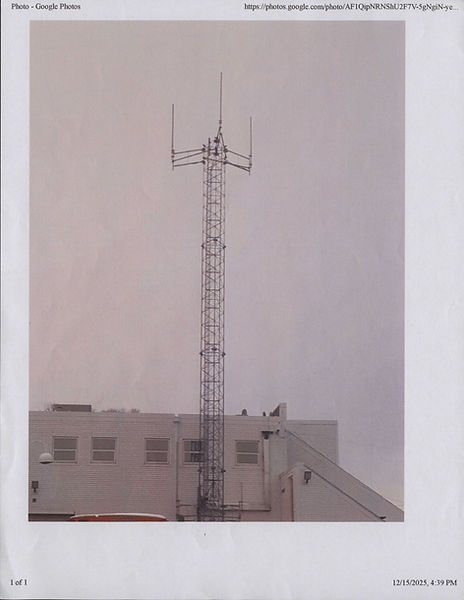
The cell tower behind the Cheshire Fire Department serves not only as a pre-roosting site for Starlings, but also for Crows, Vultures, Ravens, and hawks. View them from the parking lot behind the Cheshire Senior Center or the small parking lot near the west side of Stop & Shop.




Meet Some Trees That Stand on Stilts
by Eric Nelson
Once upon a time, there was a log from a dead White Pine tree lying on the ground. As time went by, the wood in the log rotted and started to crumble into sawdust. Moss started to grow on top of the log. The none day, a Black Birch seed fell off its mother tree and landed on the moss. The seed sprouted into a tree seedling which established its roots on the moss and sent up a tiny trunk. The log suddenly became a “nurse log”,providing the substrate for this tiny tree to grow on.
As the seedling grew into a sapling, its roots cascaded over the sides of the log, eventually reaching the ground and penetrating into the soil. Several years went by, the tree sapling grew large, and the log upon which it grew crumbled completely into sawdust. The trunk of this tree was now completely off the ground with stilt-like roots cascading off its base.
Two such trees can be seen off the east side (closest to the ball fields and Route 10) of the Red Trail at Cheshire Park. They actually line up with each other, indicating that they may have germinated on the same fallen tree trunk. The trunk of one of them has recently been cut with a chain saw but part of its trunk with the cascading roots remain at the time of this writing.
To find the Red Trail, park in the lot where the tennis courts are located. Walk past the gate to the right of the pavilion. Continue along the dirt(and rocky) road, through the goat pasture and onto the main trail into the forest on the other side of the pasture. Continue on this trail for about 20 yards looking for tree trunks with red markings on the left side of the trail. Turn left onto this Red Trail and continue to the east side of the trail closest to the ball fields and Route 10. Continue south on the trail toward the parking lot and look for the two trees near the left side of the trail.
Recommended Reading
Forest Forensics: A Field Guide to Reading the Forested Landscape
By Tom Wessels


